A man's metal detector find on a British beach has the whole country talking
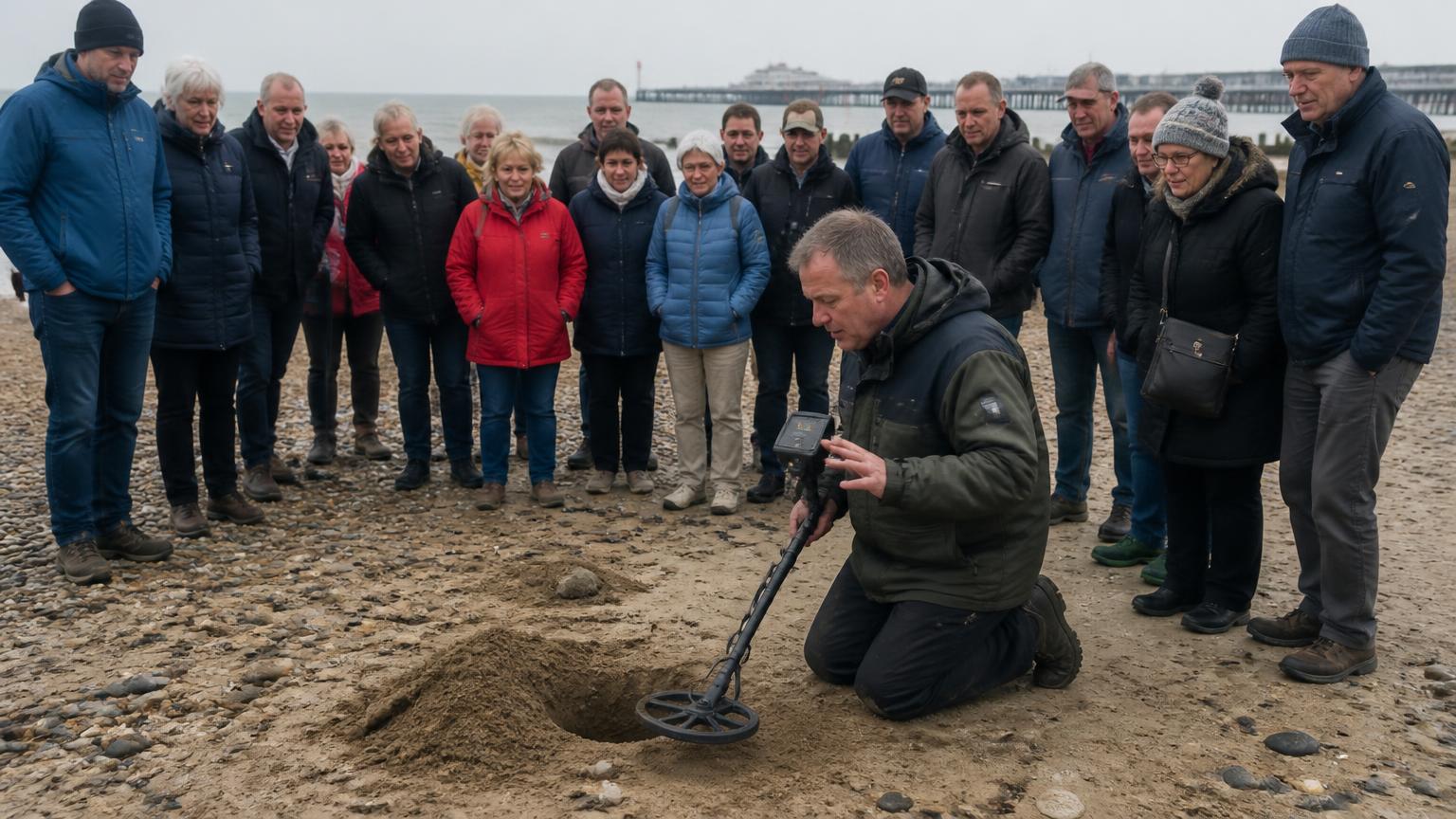
It was meant to be an ordinary evening walk. Two hours later David H. (56) from Norfolk was standing in the middle of two dozen strangers - holding an object that experts would later value at around £2,500.
David has been walking the coast with a metal detector for just under two years. "Most of it is bottle tops, fishing weights and lost keys," he says. "You do it for the fresh air, for the quiet - and for that one second when the machine sounds different to normal."
That second came on a Thursday evening in late summer, about 40 metres above the waterline, where a storm the week before had shifted an entire sandbank. The tone was not the usual scratchy signal of foil, but a clean, repeatable hit. "I swept it three times because I couldn't quite believe it."
Ten inches down - and suddenly silver
After twenty careful minutes of digging it came free: a heavily tarnished, finely worked silver disc brooch - a cloak fastener of the sort worn in the medieval period. Beside it, in the same spoil, a small, worn hammered silver coin.
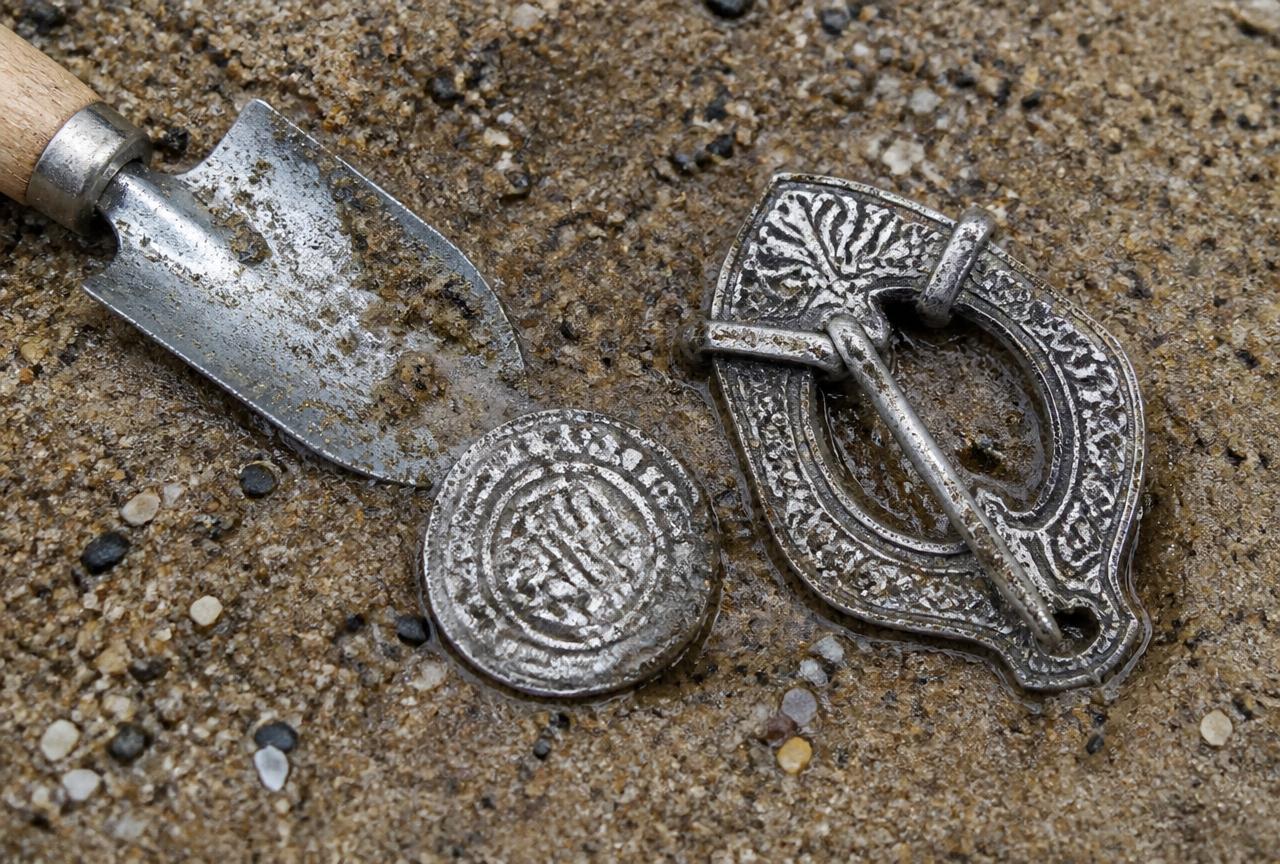
David then did precisely the right thing: he cleaned nothing, placed the find in a plastic tub, recorded the spot with photographs and a GPS reading, and reported it to the local Finds Liaison Officer that same week under the Portable Antiquities Scheme. A fortnight later two independent valuers gave their assessment: taking metal, condition and rarity together, a collector's value of roughly £2,500.
"Honestly, the money isn't the point. The point was the moment twenty complete strangers were stood round you all asking the same thing: what is it?" David H., 56, hobby detectorist, Norfolk
Why detecting is becoming Britain's favourite low-cost hobby
Stories like this reliably fill beaches at the weekend. But ask experienced detectorists and money is rarely the first thing they mention. It is something else: being outdoors, concentrating without a screen, and holding local history in your hand.
- Cheap to start: a solid beginner machine costs less than a decent e-bike battery, and running costs are close to nothing.
- Exercise without the gym: three hours of searching usually means 8,000 to 12,000 steps without noticing.
- A proper digital detox: headphones on, phone in the pocket - most people describe it as meditative.
- Great with children: every signal could be treasure, so youngsters stay hooked far longer than you would expect.
- Good for the environment: detectorists remove tonnes of metal litter from beaches and parks every year, from ring pulls to batteries.
- A friendly community: club digs, rallies and organised events put beginners and veterans on the same permitted land.
What you actually find
Realistically, 80 per cent of a day's finds are everyday scrap metal. But the remaining 20 per cent is what keeps people coming back:
- Modern coinage and dropped change - often several pounds per trip at popular bathing spots
- Lost jewellery: rings, earrings, chains - beaches after the summer season are a classic
- Hammered coins, buttons, thimbles, buckles and brooches on old footpaths and permitted farmland
- Victorian tools, horseshoes and harness fittings from a century and a half of farming
- Militaria and keepsakes - with one firm rule: if it might be ordnance, do not touch it, report it
- And the perennial favourite: the car key someone lost in the sand - lost-item searches are in more demand than you would think
Important: the law and good manners
In England and Wales you must have the landowner's permission before detecting on any land, and detecting is not allowed on Scheduled Monuments or most protected sites. Anything that qualifies under the Treasure Act 1996 - for example two or more coins of precious metal over 300 years old - must be reported to the local coroner within 14 days, and all other historic finds are best recorded with the Portable Antiquities Scheme. Scotland has its own system: all finds must be reported to the Treasure Trove Unit. Beaches are usually managed by the local council or the Crown Estate, so check before you dig. Always fill your holes and take your rubbish home.
What does a starter kit cost?
The most common misconception is that you need a £1,200 professional machine straight away. For beach, park and permitted field a good beginner package is plenty - what matters is a waterproof coil, usable discrimination between metals and a pinpointer so you can locate the object precisely in the spoil.
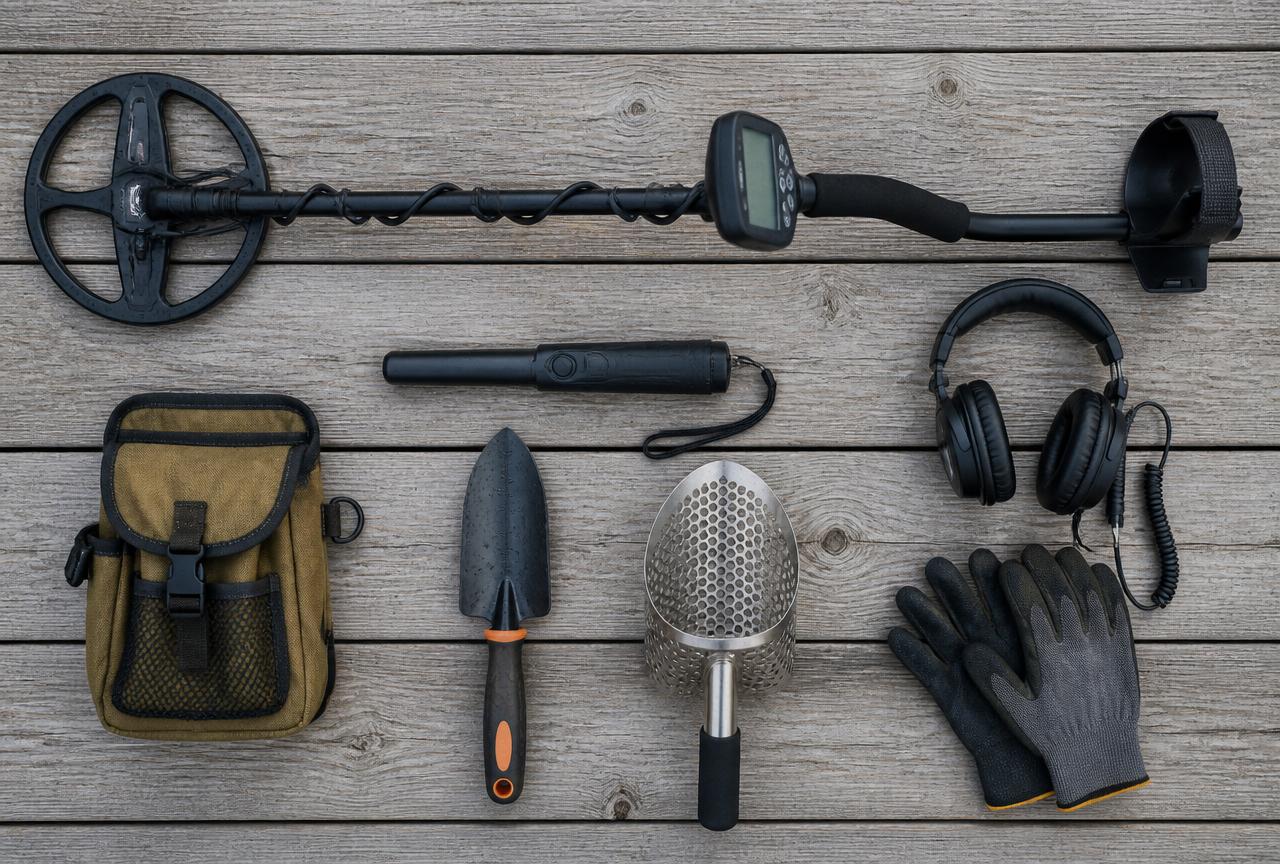
| Equipment | Realistic price |
|---|---|
| Beginner metal detector (waterproof coil) | £189 - £349 |
| Pinpointer for precise location | £49 - £129 |
| Digging trowel or sand scoop | £20 - £55 |
| Finds pouch, gloves, headphones | £35 - £80 |
| Complete starter kit | from around £299 |
For comparison: a single good find like David's would have paid for that kit eight times over. There are no guarantees in detecting, of course - but the barrier to entry is far lower than most people assume.
How to start in four steps
- 1. Choose a machine: a beginner model with simple controls, a waterproof coil and clear tone discrimination.
- 2. Sort out your ground: public beaches, permitted club land or private land with written permission from the owner.
- 3. Learn the technique: swing slowly, keep the coil low and flat, overlap every sweep.
- 4. Dig cleanly: cut a neat plug, recover the find, replace the turf, take the litter with you.
Claim 10% off + your free beginner's guide
Fancy trying it yourself? Leave your details with no obligation - we will give you a quick call, help you pick the right kit and send your pack:
- 10% off your first order (detector, pinpointer or full starter kit)
- Free beginner's guide as a PDF: choosing a machine, settings, search technique, caring for finds
- UK location list of permitted search areas and regional tips
Thank you, all set!
Your request has been received. Your 10% discount code and the beginner's guide with the location list will arrive by email. If you have questions about choosing a machine we will call you - weekdays between 10am and 6pm.
Frequently asked questions
Can I just detect on the beach?
On many public beaches detecting in dry sand is fine, provided the area is not a protected site or nature reserve. Most foreshore is managed by the Crown Estate or the local council, and both usually require a simple permit or set out conditions. A quick call to the council settles it.
Do I need permission on land?
Yes. In England, Wales and Northern Ireland you need the landowner's permission for any land search, ideally in writing, including an agreement on how finds are shared. Scheduled Monuments are strictly off limits.
Who owns a valuable find?
Items that qualify under the Treasure Act 1996 must be reported to the coroner within 14 days; a museum may acquire them, with a reward normally split between finder and landowner. In Scotland all finds go to the Treasure Trove Unit. Either way: report it, do not clean it, record the spot.
Are these machines complicated?
No. Modern beginner detectors work straight out of the box: switch on, ground balance, start searching. You will pick up the finer points in your first few outings - which is exactly what the guide is for.